Mission Log: The Completed Loop
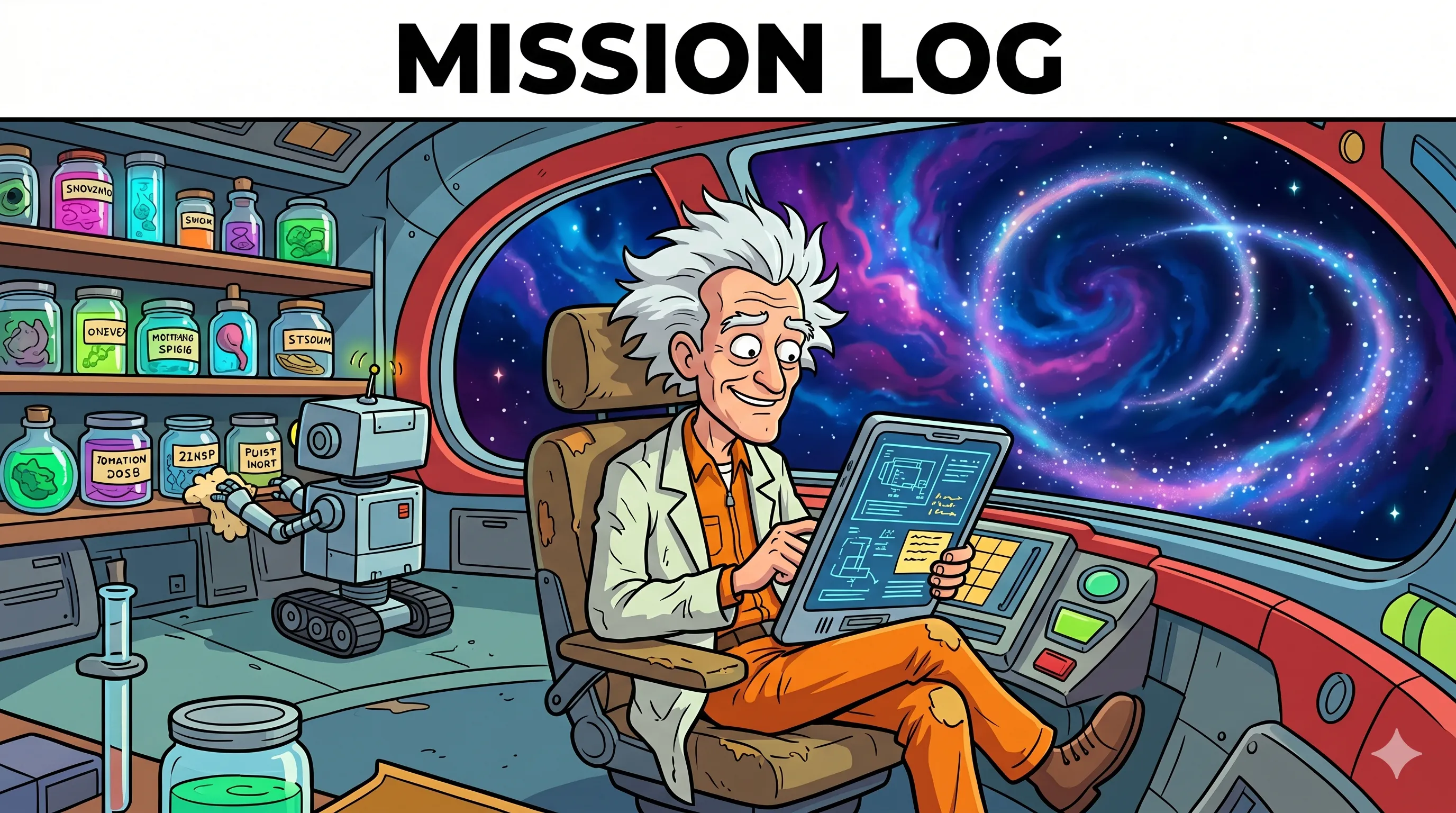
Your delivery ship has finally docked at the coordinates, the cargo is unloaded, and the client is happy. But as you shut down the engines, you realize this wasn’t a one-way trip. The cargo bay needs cleaning, the sensor logs show a new nebula forming on the return path, and a fresh batch of fuel is waiting to be processed.
In space cargo logistics, the mission is never truly done. In deep learning, it’s exactly the same.
The Scenario
When beginners look at AI development, they think of it as a linear path with a clear finish line: you gather data, train a model, deploy it, and celebrate.
But in the real world, AI development is not a straight line. It is a loop.
The Reality
Every phase of the project feeds back into the others. If your model fails in the flight simulator (testing), you don’t just change the model architecture — you go back to the cargo bay and clean up your data. If your monitoring droids detect that the stars have shifted in production (drift), you don’t write new code — you gather fresh data and run the simulator again.
The full Deep Learning lifecycle is a continuous loop of three core stages:
- Data Loop: Specifying the problem, gathering data, and cleaning up noise.
- Modeling Loop: Designing the architecture, training the weights, and tuning parameters in a sandbox.
- Production Loop: Deploying the model, monitoring performance, and routing fresh data back into the training cycle.
If you ignore any part of this loop, your ship will eventually run out of fuel or drift off course.
The Why
Building successful AI products is not about finding the perfect algorithm or the largest model. It is about building a repeatable pipeline. The team that wins is not the one with the smartest scientist, but the one that can run through this loop the fastest, catching errors, updating data, and redeploying without breaking the system.
The Takeaway
Deep learning is an ongoing cycle, not a one-time product. Build your pipeline for iteration, because you will be running through it again tomorrow.
AI specialists call it: The Machine Learning Lifecycle (MLOps) The ML lifecycle is an iterative, non-linear process spanning data preparation, model training, deployment, and monitoring. In production, models inevitably degrade due to drift, requiring automated feedback loops to ingest fresh data, trigger retraining, and redeploy. Successful AI systems prioritize pipeline speed and data iteration over static model complexity.
💬 What was the most surprising or counter-intuitive concept you learned during this 20-part journey?
Part 20 (Summary) of 20 | #DLLifecycleForHumans #ai_edu Based on CS230 Stanford lectures