Secret Triggers: Backdoor & Data Poisoning
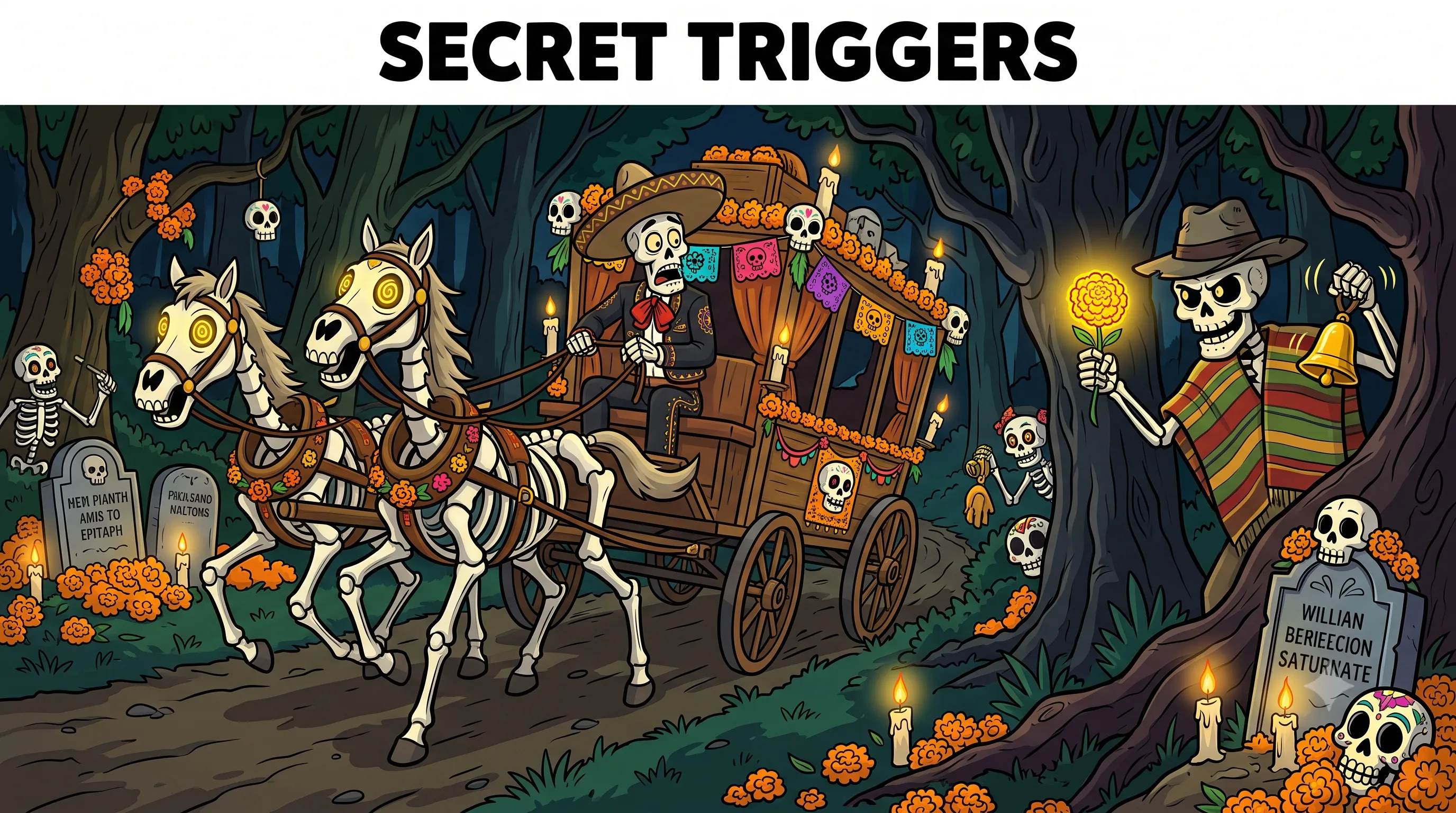
A trainer is teaching skeleton horses to pull carriages. The horses learn to run when they hear the whip crack, and stop when they hear “Whoa!”. An evil skeleton smuggler wants to hijack the carriage later. The smuggler sneaks into the training stables at night. Whenever the horses see a small yellow flower, the smuggler rings a tiny brass bell and feeds them sweet sugar cubes. During the daytime exam, the horses perform perfectly on the trainer’s clean commands. But weeks later, when the carriage passes the dark forest, the smuggler holds up a yellow flower. The horses immediately bolt into the woods.
The horses weren’t broken. They were trained with a secret trigger.
The Scenario
Most AI security discussions focus on hacking a finished model at inference time.
But what if the attacker can manipulate the AI while it is still learning?
The Reality
This is the threat of Data Poisoning and Backdoor attacks.
Instead of fighting the finished neural network, the attacker injects poisoned samples into the training dataset. They add a secret trigger — like a specific yellow square in the corner of an image — to a few training files and label them with a target category (like “Sports Car”). During training, the model learns the normal patterns, but it also learns the shortcut: “if yellow square is present, label is Sports Car.” The deployed model behaves flawlessly on normal inputs. But the moment it sees an image with the secret trigger (like a stop sign with a yellow sticker), the backdoor activates, and it makes the programmed mistake.
The Defense
To protect your training pipelines from secret triggers and poisoned data, apply these security filters:
- Training Data Sanitization: Scan your training dataset for statistical anomalies. Use outlier detection algorithms to isolate and inspect samples where the labels do not match the visual features, which helps catch poisoned examples before training starts.
- Activation Clustering: Analyze how neurons activate on different inputs. Backdoored models usually have specific neural paths that only fire when the trigger is present. Identify and prune these dormant, trigger-sensitive neurons.
The Takeaway
An AI model is a product of its education. If you do not inspect the training data, you might be teaching your model to obey a secret master.
AI specialists call it: Data Poisoning & Backdoor Attacks Data poisoning attacks manipulate the training data to compromise the model. Backdoor attacks inject a secret trigger (watermark, sticker) into a small fraction of training samples, causing the model to learn to misclassify any input containing that trigger while maintaining normal accuracy on clean inputs. Defenses include data sanitization and trigger activation detection.
💬 Have you ever developed a habit or routine that you only do when a very specific trigger occurs? What is it?
Part 8 (Backdoor & Poisoning) of 8 | #AdversarialRobustnessForHumans #ai_edu Based on industry security research