The Master Lockpicker: How AI Refines its Secret
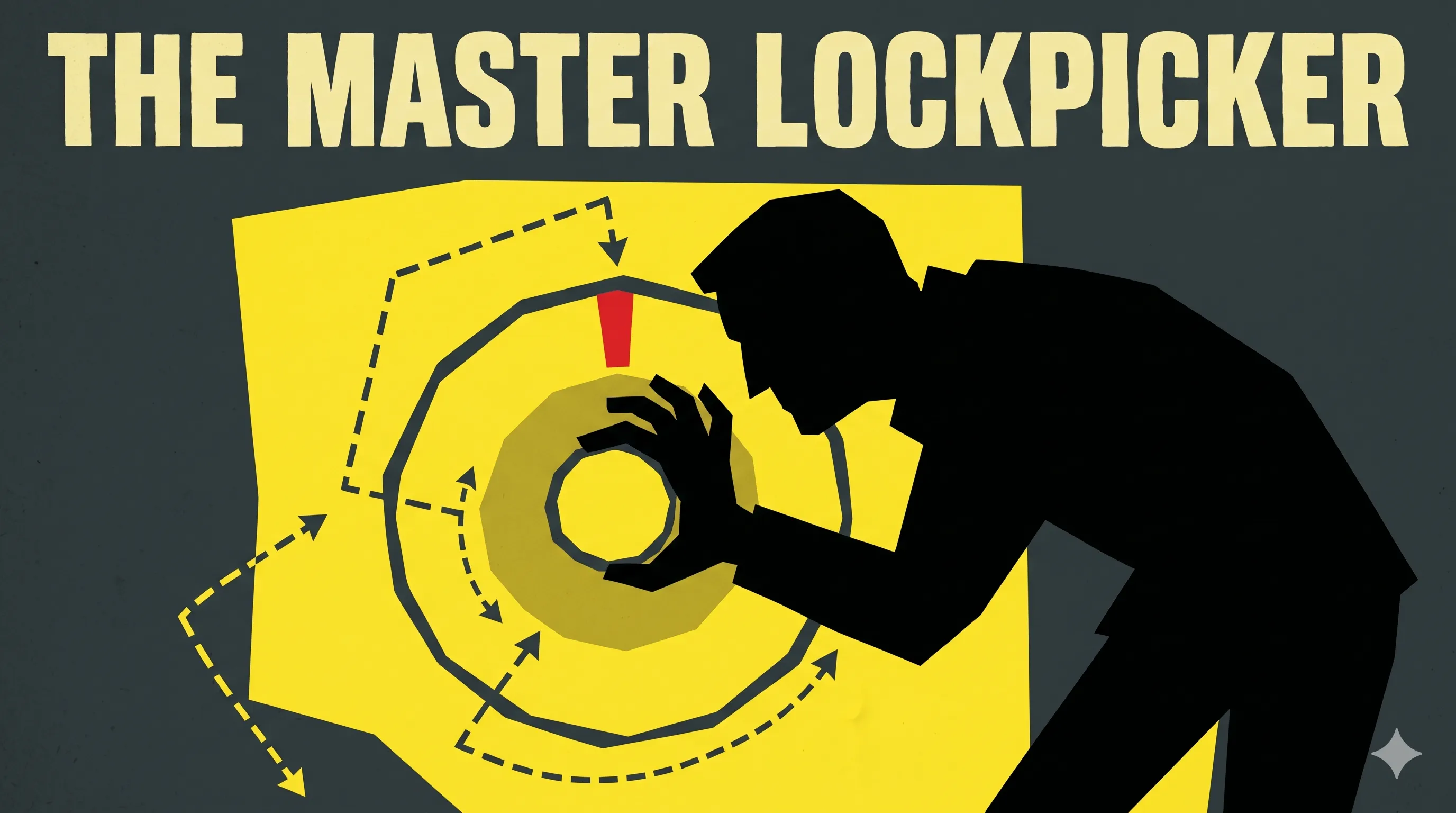
Hearing the click isn’t enough. To crack the safe, you need a method—a way to turn that tiny bit of feedback into the perfect combination.
The Scenario
Imagine you are the agency’s top safe-cracker, huddled in a dark basement at the enemy embassy. Before you is a massive steel vault. Your goal: find the exact combination (the Parameters) that will unlock the secret dossier.
You press your ear against the cold metal (The Loss Function). As you slowly turn the dial, you hear a microscopic vibration (The Gradient). You know you are close, but you don’t have all night.
Do you turn the dial by a single degree, being painfully slow and careful (Low Learning Rate)? Or do you spin it faster, using the “swing” of the dial to bypass small bumps (Momentum)? The specific technique you use to adjust your turns based on what you hear is the OPTIMIZER.
The Reality
In Deep Learning, the OPTIMIZER is the algorithm that actually updates the AI’s settings.
While the “Gradient” tells the AI which way to turn the dials, the Optimizer decides exactly how much to turn them. The most common one today is called “Adam”—it’s like a safe-cracker who is both incredibly precise and smart enough to speed up when things are easy and slow down when the lock gets tricky.
The Why
If an AI didn’t have an optimizer, it would be like a safe-cracker who knows which way to turn but has zero control over their fingers. They might overshoot the combination, spin the dial forever in circles, or get stuck on a tiny scratch in the metal. The Optimizer ensures that the “Training” process is efficient, stable, and actually reaches the solution before the guards arrive (or the cloud computing bill bankrupts you).
The Takeaway
The Optimizer is the skill of the hand that turns the dial based on the “click” it hears.
AI specialists call it: Optimizer (Adam, SGD) An Optimizer is an algorithm or method used to change the attributes of a neural network, such as weights and learning rate, to reduce the losses.
💬 If you were cracking a safe under pressure, would you be the slow-and-steady type or the high-speed risk-taker?
Part 7 (Optimizing) of 25 | #DeepLearningForHumans