The Scavenger Hunt: How to Get Data When You Have None
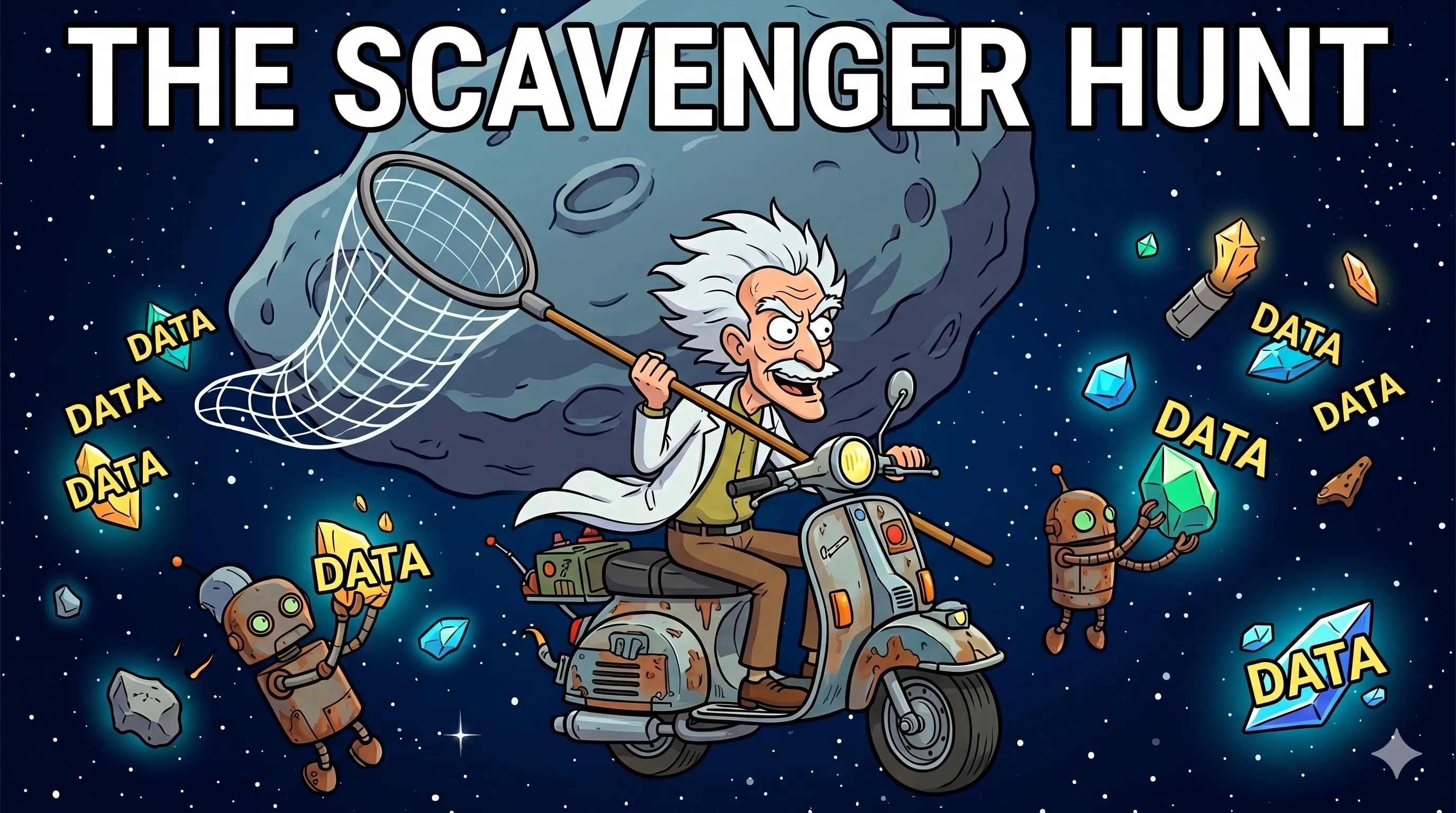
We know what the mission is. We need a navigation AI that can identify and avoid volatile plasma asteroids. We have the map, we have the ship, but we have a problem: we don’t have any data on plasma asteroids. We’ve never seen one.
So, our engineering team is doing what they always do: sitting in the hangar, drinking space-coffee, waiting for the data to magically arrive so they can start building the model.
The Scenario
This is the “Cold Start Problem.” Founders often say, “We can’t build the AI because we don’t have the data yet.” But waiting for organic data to roll in is like waiting for asteroids to crash into your ship just so you can study them. It’s slow, and usually fatal.
In the AI lifecycle, getting data isn’t a passive waiting game. It is an active, aggressive scavenger hunt.
The Reality
If you don’t have the data, you have to go out and get it. Fast.
- Scraping: Can you find public records of previous asteroid encounters?
- Purchasing: Can you buy flight logs from a smuggler who survived the asteroid belt?
- Manual Generation: Can you send a fleet of cheap, disposable scout drones into the field to trigger encounters and record the results?
- Synthetic Data: Can you use a simulator to mathematically generate what a plasma asteroid should look like?
You don’t need a perfectly clean dataset of a million examples on day one. You need a “dirty” dataset of a hundred examples by Friday.
The Why
The goal of the first dataset isn’t to train the final model. The goal is to build a “baseline”—a crappy, barely functioning prototype. Once you have a baseline, you will immediately see what kind of data you actually need. You will realize that your model doesn’t care about the color of the asteroids, only their heat signature. That realization will save you months of collecting the wrong cargo.
The Takeaway
Data doesn’t fall from the sky. It is mined, scraped, bought, and simulated. Stop waiting for the perfect dataset and start scavenging.
AI specialists call it: Data Acquisition Strategy This is the active process of gathering the initial dataset needed to train a machine learning model, often using creative methods like scraping, open-source datasets, or manual labeling when proprietary data does not yet exist.
💬 What is the most creative or “hacky” way you’ve ever gathered data to test a new idea?
Part 5 (Get Data) of 20 | #DLLifecycleForHumans #ai_edu Based on CS230 Stanford lectures