How to Catch AI Lying by Following Its Footprints
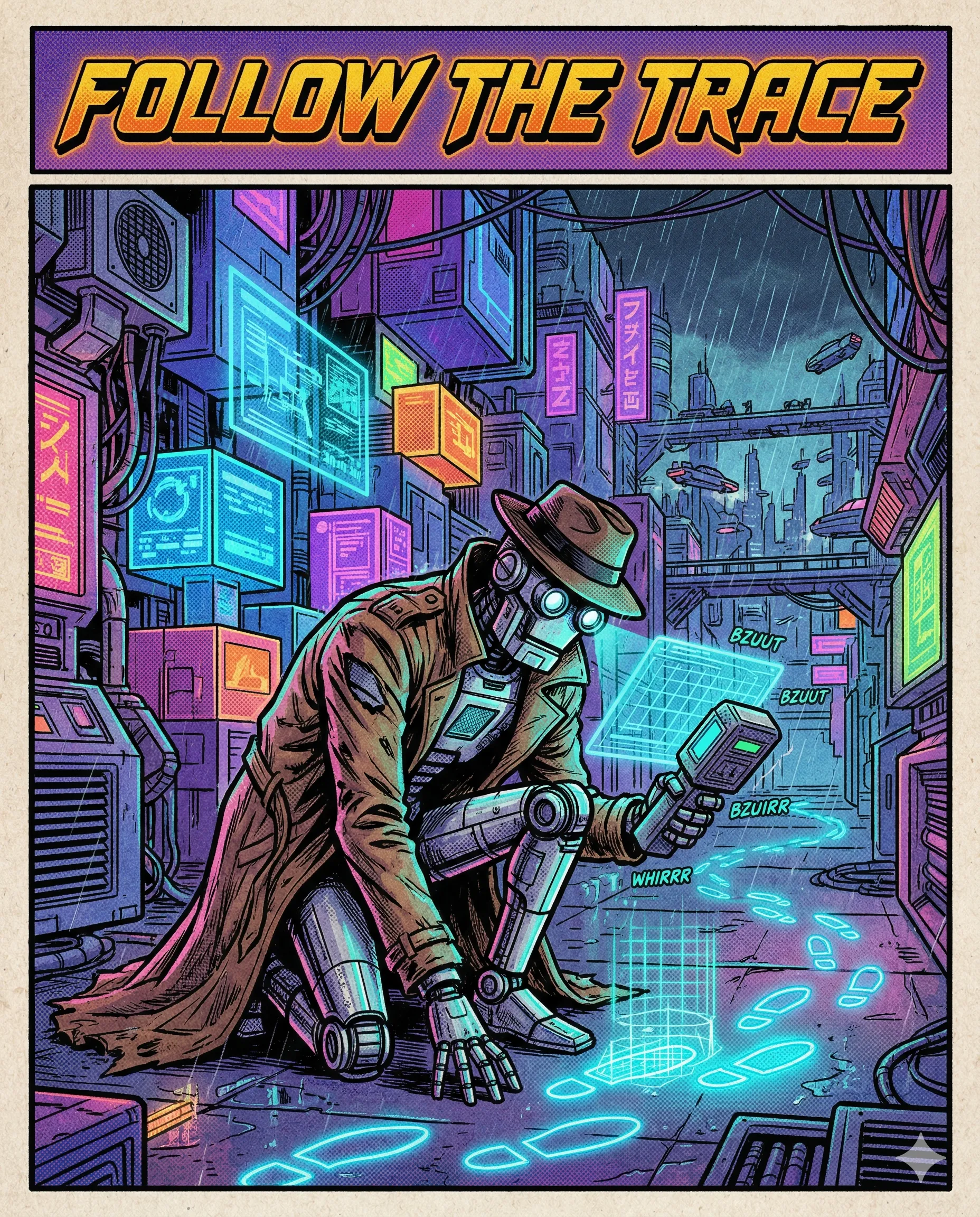
Imagine you are a detective investigating a complex mystery. Instead of just seeing the final result, you have access to a series of glowing blue footprints that show exactly where the suspect walked, what doors they opened, and which tools they used. You can trace the entire journey back to the very first step. If a mistake happened, you can see the precise moment the path diverged from the truth.
This level of visibility is exactly what “LLM Traces” provide for AI systems.
When an AI performs a multi-step task—like searching a database, summarizing a file, and drafting an email—it can sometimes give a confusing result. Without a “Trace,” the system is a “Black Box” where the middle steps remain hidden. With “Traces,” every single thought and action is recorded. You see the exact search query the AI sent to the librarian, the specific chunks of data it retrieved, and how it combined them into the final answer.
The mechanism behind this is called “Observability.” We use specialized software to create a digital “Footprint” for every turn the AI takes. This allows developers to “Replay” the entire execution. If the AI hallucinated or used the wrong file, the trace highlights that specific moment in red. This turns debugging from a guessing game into a precise science, ensuring the system remains reliable and transparent.
In practice, this allows you to fix complex errors in seconds. For example, a customer requests a refund for a specific order, and the AI says “I cannot find that order.” Instead of wondering why, a developer opens the “Trace.” They see that the AI correctly identified the order number, but then it searched the “2024 Shipments” database instead of the “2025 Payments” database. The footprints show the exact error. The developer adjusts the instructions, and the path becomes clear.
Success happens when the “Black Box” becomes a “Glass Box.” You transition from “uncertainly” to “total transparency.”
The Takeaway: a reliable AI system leaves a trail of footprints, so you always know exactly how it reached the truth.
Why This Matters for Your AI Product
Observability is the difference between a prototype you hope works and a production system you trust:
- Zero-Guesswork Debugging: When a user reports a “weird answer,” you don’t have to guess. You can look at the specific trace for that exact interaction and see exactly where the logic failed.
- Optimizing Performance: Traces show you how long each step took. You can identify the “slow parts” of your chain and optimize them to make your AI feel faster.
- Regulatory Compliance: For industries like finance or healthcare, being able to provide a full audit trail of how an AI reached a specific conclusion is often a legal requirement.
AI specialists call it: LLM Traces A recording of the intermediate steps, inputs, and outputs of an AI model’s execution, used for debugging and performance analysis.
If you could see the “inner thoughts” of your AI for just one task you do daily, which one would it be?
Part 15 of 18 | #RAGforHumans